Gasing
Lombok / Indonesia — Traditional Competition Top
Name origin: It seems the name comes from the combination of two Malay words: “ka” (from kayu, meaning wood) and “sing” (from pusing, meaning spin).
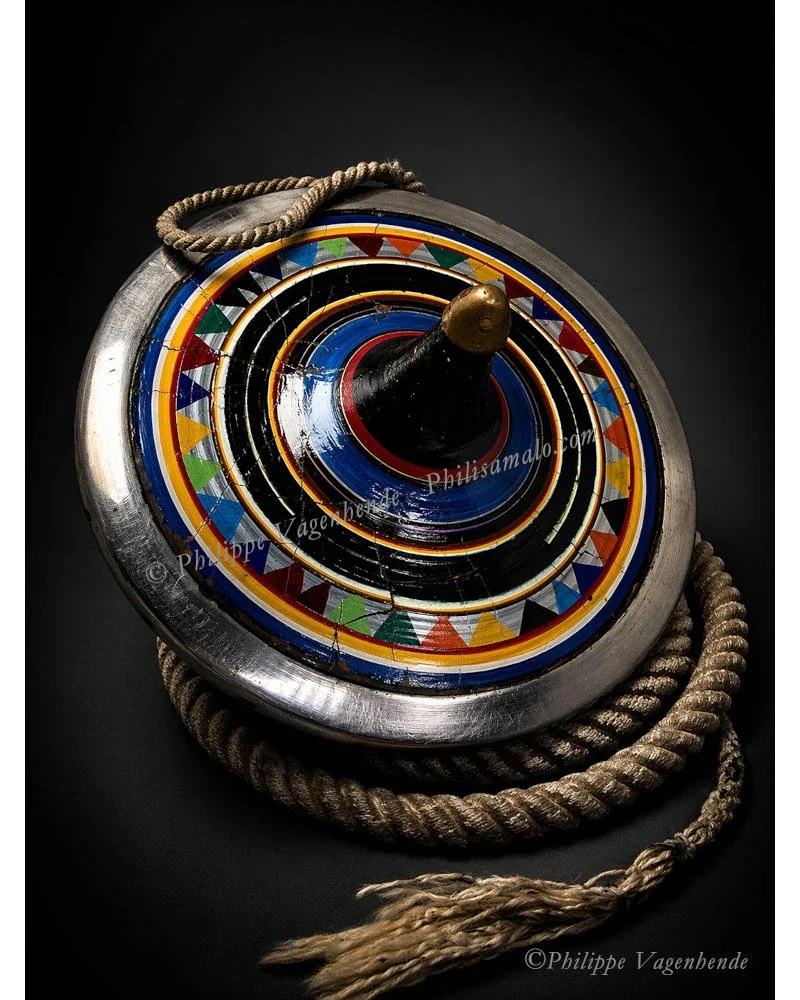
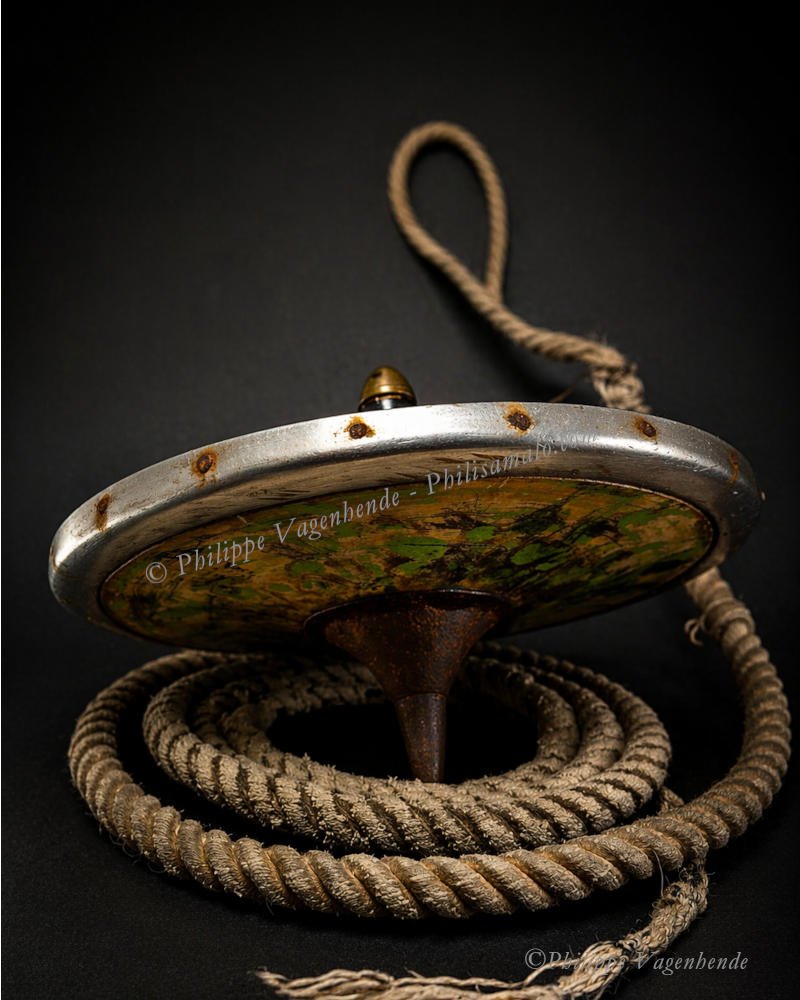
The gasing is a traditional wooden spinning top deeply rooted in the cultural life of Southeast Asia, particularly in Malaysia and Indonesia. Designed for endurance, it is launched using a wound string and can spin for extended periods, sometimes reaching impressive levels of stability and duration.
In regions such as Lombok, the gasing is more than a simple toy — it is part of a vibrant communal tradition. Villages organize competitions where participants gather to test both the quality of their handcrafted tops and their launching skill. These events are moments of social connection, where craftsmanship, technique, and local pride come together.
Each gasing is carefully shaped from dense hardwood to ensure optimal balance. The body is often wide and slightly flattened, allowing for longer spins, while the tip—traditionally metal—reduces friction and improves endurance. The proportions, weight distribution, and finishing are crucial, and skilled makers refine these elements through experience passed down across generations.
Beyond its function, the gasing reflects a deep understanding of motion and equilibrium. Its rotation embodies both precision and rhythm, making it not only an object of play, but also a symbol of balance and continuity within the cultures that sustain it.